Delmar, DE · Electrical Services

Ceiling Fan Installation in Delmar, DE — Balanced, Braced, and Wired Right

A ceiling fan that's installed correctly moves air quietly and efficiently, takes load off your HVAC system, and runs without wobble or noise year-round. One that's hung from the wrong box or balanced poorly does the opposite. We install ceiling fans correctly from the start — and we fix the ones that weren't.

For Delmar, DE homeowners, we install fans in rooms with existing fixtures and rough-in fan-rated boxes in rooms that don't have one. Every fan we install is properly braced, balanced, and wired for both light and remote control. Bring your own fan or we can supply one — either way, the install is done right.

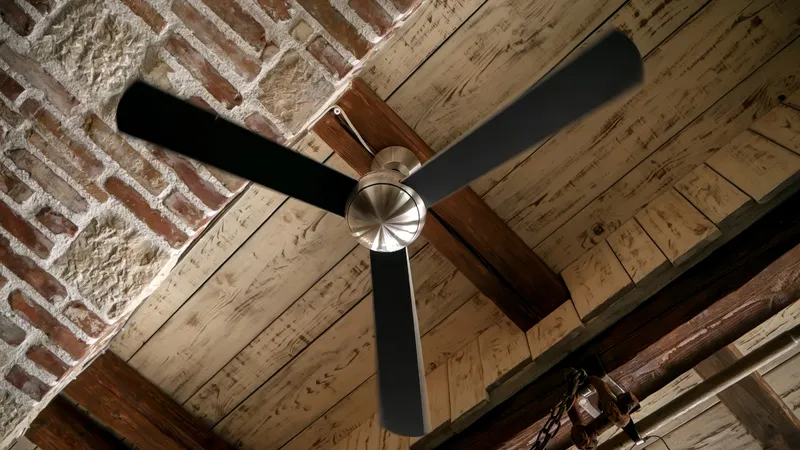
Ceiling fan installation by licensed electrician in Delmar DE

Starts With the Box

A Ceiling Fan Is Only as Good as the Box It Hangs From

Ceiling fan installation includes more than hanging the fixture. It starts with verifying that the ceiling box is rated to support a fan — and replacing it if it isn't. A standard light fixture box is designed to hold a static fixture. A ceiling fan spins, shifts its weight dynamically, and pulls on the mount differently with every speed change. A fan-rated box is anchored to framing or a brace rated for that load — a standard box is not.

Many Delmar homes have standard light boxes in bedrooms and living rooms that were never meant to support a fan. It's the first thing we check before any fan goes up, and we replace it when the box isn't rated for the job. Here's what a proper install covers:

  1. 1. Verify or install a fan-rated ceiling box anchored to framing or a rated expandable brace.
  2. 2. Connect wiring for the fan motor, light kit, and remote receiver if applicable.
  3. 3. Balance blades and test full operation before the job is complete.

Installing a Fan Where No Fixture Exists Means Running Wiring First

A room or porch with no existing overhead fixture needs wiring before a fan can go up. That means running cable from the nearest circuit, installing a fan-rated box, and adding a proper wall switch. The finished result is a clean install — not a pull-chain fan with no wall control or an extension cord running across a porch ceiling.

Covered porches and sunrooms on Delmar homes are frequently unfinished electrically. We rough-in the box, run the circuit, and install the switch in the right location before the fan goes up. The porch gets a fan that works the way it should from a proper wall control.

Vaulted & High Ceilings

High Ceilings and Vaulted Spaces Require the Right Mount and Down Rod

Fan blade height matters for both air movement and safety. Blades need to be at least seven feet from the floor to operate safely in an occupied room. On a standard eight-foot ceiling, a flush mount works. On a vaulted great room or cathedral ceiling, it doesn't — the angle of the ceiling requires a sloped ceiling mount and a down rod sized for the pitch.

Vaulted great rooms and cathedral ceilings are common in Delmar's newer construction homes and addition builds. These installs require the correct hardware for the ceiling pitch, not a standard mounting kit adapted to fit. We select the right mount and down rod before the fan goes up so blade height and clearance are correct for the space.

Outdoor & Covered Porches

Outdoor Ceiling Fans on Covered Porches Need Wet or Damp-Rated Equipment

An indoor ceiling fan installed on an outdoor porch will fail — and it creates an electrical hazard while it does. A covered porch protected from direct rain requires a damp-rated fan. An open area with direct moisture exposure requires a wet-rated fan. The rating is on the fixture label, and it matters.

Delmar's humid summers and coastal proximity make moisture exposure a real factor for any fan mounted outside. Humidity alone is enough to corrode motor windings and blade hardware in an indoor fan over a single season. We install fans with the correct outdoor rating for the location — covered porch, screened room, or open structure — so the fan holds up in the conditions it's actually operating in.

Remotes & Light Kits

Remote Controls and Light Kits Have to Be Wired In — Not Just Clipped On

A remote receiver clipped loosely onto existing wiring inside the canopy isn't the same as one that's properly connected. A properly wired receiver gives the remote clean, reliable control over fan speed and light independently. A poorly connected one causes interference, inconsistent response, and shortened component life.

Older Delmar homes often have only a single-conductor switch leg running to the ceiling box — one wire that controls everything. That's enough to support a remote-controlled fan when the receiver is wired correctly inside the canopy. The receiver handles the separation between fan motor and light kit functions, so you get independent control without running a second switch leg through the wall.

Wobble & Balance

A Fan That Wobbles Was Either Balanced Wrong or Hung From the Wrong Box

A wobbling ceiling fan has one of two causes: the blades are out of balance, or the box it's hanging from isn't rated and secured for fan load. Both are fixable. Neither gets better on its own.

DIY ceiling fan installs are common in Delmar, and wobbling fans are one of the most frequent service calls we get. The most common cause is a standard light fixture box that was never replaced before the fan went up. The box flexes under the dynamic load, the fan rocks, and the wobble gets worse over time. We identify the source — box, blade balance, or both — and correct it. A fan that's hung and balanced correctly runs quietly at every speed.


Customer Reviews

What Our Customers Say

Google

"Simmons Electrical Service is top notch — they are very professional and make you feel like family. Andy one of the service guys is a true master of his occupation. Last but not least the owner Mr. Simmons is truly a GOD sent. Thank You All So Very Much."

J

james mumford

Google Review

Google

"Showed up on time. Friendly and explained what was being done. Cleaned up after themselves. Jay and his helper were very professional. Will be contacting Simmons Elec. for any other electrical issues in the future."

R

Renee Reid

Google Review

Google

"We have used Simmons Electrical for a number of projects here at Pine Bluff Storage as well as Salisbury Bible Fellowship. They are professional, reliable, affordable and they always interact with us with a smile. We will continue to use them on future projects."

D

David Insley

Google Review

FAQ

Frequently Asked Questions

Can I install a ceiling fan where a light fixture already exists?

You can if the existing box is fan-rated — we check the box before the fan goes up and replace it with a rated box if needed, since using a standard light fixture box under a ceiling fan is a safety issue.

What size ceiling fan do I need for my room?

Blade span is matched to room size — fans up to 42 inches work for small rooms, 52 inches covers most standard bedrooms and living rooms, and 60 inches or larger is appropriate for open great rooms and large spaces.

Do ceiling fans actually save on energy costs year-round?

Yes — running counterclockwise in summer creates a downdraft that makes the room feel cooler, and switching to clockwise on low speed in winter pushes warm air that collects at the ceiling back down into the living space.

Can you install a ceiling fan on a vaulted ceiling?

Yes — vaulted ceiling installs require a sloped ceiling mount and the correct down rod length for the pitch of the ceiling; a standard flush mount isn't designed for an angled surface.

Do I need a separate wall switch for the fan and the light?

Not always — a remote receiver wired into the canopy allows independent control of the fan motor and light kit from a single switch location or a handheld remote without running a second switch leg.

What's the minimum ceiling height needed to install a ceiling fan?

Fan blades need to be at least seven feet from the floor — rooms with lower ceilings may need a low-profile or hugger-style mount that sits flush against the ceiling without a down rod.

Ready when you are

Power problems? Call Simmons.

Licensed master electrician. Honest pricing.
A locally owned family business serving Delmarva since 1985.